Behind the Red Flag: What Really Happens When a Canadian Pharmacist Pauses Your Online Order
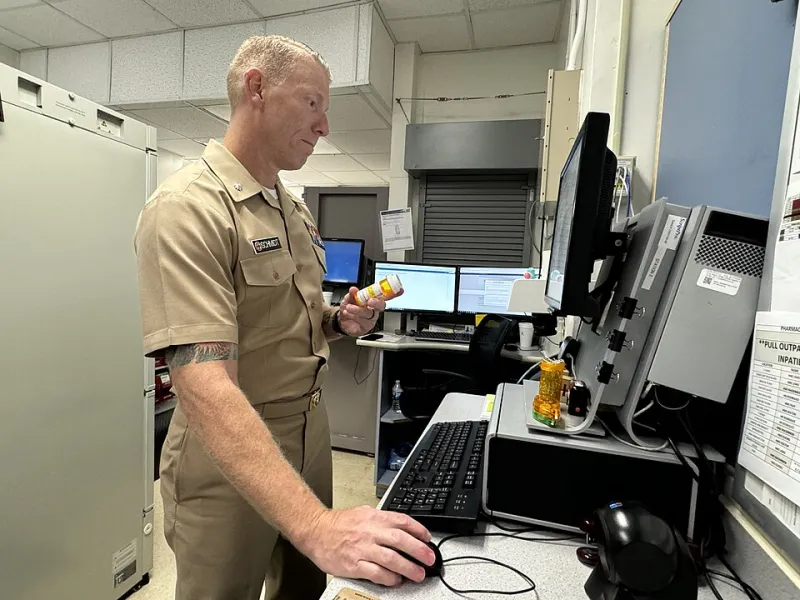
Photo: U.S. Navy NMRTC by Emily McCamy, Public domain, via Wikimedia Commons
For most Canadians, ordering a prescription online is a quiet, routine transaction. You upload a prescription, confirm your details, and wait for the parcel. So when an email arrives saying your order has been flagged for pharmacist review, it is natural to feel a flicker of concern. Has something gone wrong?
In most cases, the opposite is true. That flag is the system working exactly as it should — a licensed professional stepping in to double-check a medication before it reaches your door. Here is what actually happens behind the scenes, and why those extra hours can matter more than speed.
Why Orders Get Flagged in the First Place
Every prescription processed through a licensed Canadian pharmacy passes through a clinical review before dispensing. Software screens each new order against your medication profile, and certain patterns automatically prompt a pharmacist to look closer. The most common triggers include:
- Drug interactions — a new prescription that may interact with something you already take, including over-the-counter products and natural health products
- Dosage concerns — a strength or frequency that falls outside typical ranges for your age, weight, or kidney function
- Duplicate therapy — two medications in the same drug class, sometimes prescribed by different prescribers who are not aware of each other
- Allergy or intolerance flags — a documented sensitivity that matches an ingredient in the new order
- Incomplete or unclear prescription information — missing directions, ambiguous quantities, or prescriptions that require clarification from the prescriber
None of these triggers means a mistake has definitely been made. They simply mean a human expert needs to confirm the order is safe before it moves forward.
Three Scenarios, Three Saves
To illustrate how this works in practice, here are three anonymized scenarios drawn from the kinds of interventions Canadian pharmacists handle regularly.
The duplicate blood thinner. A retiree in Hamilton uploaded a new prescription from a walk-in clinic while still filling an older prescription from his cardiologist. Both were anticoagulants — different names, same job. Taking both together would have significantly raised his bleeding risk. The pharmacist caught the overlap, contacted the prescribers, and the order was corrected before dispensing.
The quiet interaction. A customer in Winnipeg ordered a common antibiotic for a sinus infection. Her profile showed she also took a medication for an irregular heartbeat. The combination could have caused a dangerous heart-rhythm disturbance. The pharmacist recommended an alternative antibiotic, confirmed it with her physician, and her order shipped the next day — safely.
The dosage that didn't add up. An elderly customer's new prescription listed a dose nearly double what is typical for her age and kidney function. The prescriber, reviewing the pharmacist's query, realized a transcription error had occurred at the clinic. The corrected prescription arrived within hours.
In each case, the flag was not a delay. It was the safety net.
What the Pharmacist Actually Does
When an order is flagged, a licensed pharmacist reviews the full clinical picture: the new prescription, your existing medication list, documented allergies, relevant lab values if on file, and Canadian prescribing guidelines. Depending on what they find, they may:
- Contact your prescriber to clarify or confirm the order
- Reach out to you directly to ask about symptoms, other medications, or supplements you may not have listed
- Counsel you on how to take the medication safely once resolved
- Document the intervention so your medication record stays accurate for future orders
This is clinical work, not paperwork. Pharmacists are among the most accessible medication experts in the Canadian health system, and this review step is where their training earns its keep.
Why the Flag Email Is a Feature, Not a Failure
Receiving a review notice can feel like an inconvenience, especially if you are waiting on an important medication. But consider what the alternative looks like: a dispensing system that ships whatever arrives, no questions asked. The flag exists precisely because errors — duplicate prescriptions, transcription mistakes, overlooked interactions — happen every day in healthcare, and catching them before dispensing is dramatically safer than correcting them after.
A few practical tips can make the process smoother:
- Keep your medication list current, including vitamins, supplements, and products from other pharmacies
- Respond promptly if the pharmacy contacts you; most delays are simply waiting on a callback
- List all prescribers, especially if you see more than one physician or a nurse practitioner
- Ask questions — a review call is a good opportunity to understand your medication better
The Bigger Picture for Canadian Patients
As more Canadians turn to online pharmacies for convenience and cost savings, the clinical review process becomes even more important. A reputable Canadian service will always employ licensed pharmacists who can refuse, clarify, or correct an order — and will be transparent when they do. If a service never contacts you, never questions an order, and never flags anything, that silence should worry you more than a flag ever should.
The next time your order pauses for review, you can read that email differently. It means a qualified professional looked at your prescription, saw something worth checking, and took the time to protect you. In a healthcare system as busy as ours, that is not a delay. That is the system doing its job.