The 2–8 Degree Promise: Keeping Temperature-Sensitive Medications Safe on Their Way to Your Door
Every vial of insulin that leaves a Canadian pharmacy carries an invisible instruction: keep me between 2 and 8 degrees Celsius. It is a narrow window, and across a country where January mailboxes can sit below -30°C and July driveways can push a parked car past 50°C, maintaining that window between the dispensing counter and your refrigerator is one of the quiet engineering feats of modern pharmacy delivery.
For the growing number of Canadians who receive prescription medications by mail — whether through public programs, private insurers, or licensed online pharmacy services — understanding how the cold chain works, and where it can fail, is more than curiosity. It is a matter of medication safety.
Why Temperature Matters More Than You Might Think
Insulin is the most familiar example, but it is far from the only one. Biologic drugs used to treat rheumatoid arthritis, inflammatory bowel disease, and migraine; certain vaccines; some hormone therapies; and a range of injectable medications all share the same vulnerability: they are proteins and complex molecules that degrade when stressed by heat or, less obviously, by freezing.
Heat accelerates the breakdown of these molecules, quietly reducing potency. Freezing is equally destructive in a different way — ice crystals can physically rupture the structures of the drug, and once frozen, an insulin vial or biologic pen may never fully recover its effectiveness even after it thaws. A vial that looks perfectly clear can be clinically weakened.
The trouble is that this damage is invisible. There is no colour change, no odour, no warning label that appears after a bad transit day. Which is why the logistics surrounding the delivery matter so much.
Inside the Cold Chain: From Manufacturer to Mailbox
The journey of a temperature-sensitive medication is best imagined as a relay race, with the baton being passed through several sets of hands.
It begins at the manufacturer, where products are shipped in insulated packaging — often with temperature indicators or data loggers that record the conditions inside the box. From there, medications typically move through wholesale distributors in refrigerated warehouses and climate-controlled trucks before arriving at the dispensing pharmacy, where they are stored in monitored refrigerators.
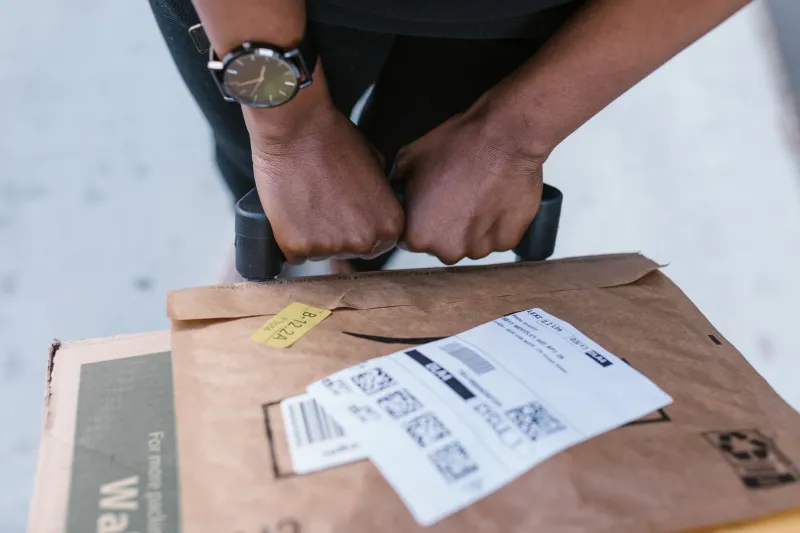
The final leg — from pharmacy to patient — is where the chain is most exposed. Pharmacists we spoke with describe this last stage as the part of the journey they worry about most, because it is the only portion they cannot directly control.
"We can verify our fridge logs down to the hour," one community pharmacist in Manitoba explained. "What happens after the courier picks up, or after the parcel is dropped at a rural address where nobody's home — that's where we rely on planning and on the patient."
The Riskiest Moments in a Canadian Winter
Canada's climate makes the last mile uniquely challenging. Winter brings several predictable hazards:
- The unheated mailbox. In much of Canada, community mailboxes and door slots sit outdoors. In Winnipeg or Saskatoon in February, the interior of a mailbox can match the ambient air temperature well below freezing. A parcel left there for even a few hours can freeze its contents solid.
- The porch delay. Insulated packaging buys time — usually measured in hours, not days — but a box left on a snow-dusted porch overnight has effectively been left outside.
- The delivery gap. Rural and remote deliveries, which often involve longer transfer times and intermittent tracking, carry more exposure windows than urban courier routes.
Summer introduces its own dangers. A parcel left in a courier vehicle during a heat wave, or transferred to a hot dashboard or trunk, can exceed safe temperatures within an hour or two. Interior temperatures in a parked car in southern Ontario in July can climb above 60°C — far beyond what any insulated pouch can hold back for long.
What Pharmacists Recommend: Protecting Your Own Delivery
The good news is that patients have more control than they might expect. Pharmacists and mail-order pharmacy teams consistently recommend a handful of practical steps:
1. Track the shipment and plan to be home. If a tracking number is provided, use it. Being present to bring the parcel inside immediately is the single most effective safeguard.
2. Redirect the delivery when possible. Many couriers allow parcels to be held for pickup at a depot. Collecting a medication shipment in person — even from a local convenience store acting as a pickup point — eliminates porch and mailbox exposure entirely.
3. Ask about packaging. Reputable pharmacies that ship refrigerated medications use insulated liners and, in warmer or colder months, gel packs or phase-change materials designed to hold 2–8°C for a defined period. Ask how long the packaging is rated for, and whether seasonal adjustments are made.
4. Check for temperature indicators. Some shipments include a small indicator label that changes colour if the contents have exceeded a threshold. If yours has one, inspect it before accepting the package.
5. Know when to refuse a delivery. If a box arrives crushed, soaked, or with an indicator showing a temperature breach, contact the pharmacy before using the contents. Most licensed services will replace compromised refrigerated medications.
6. Refrigerate promptly — and correctly. Once inside, insulin and biologics belong in the main body of the refrigerator, not the door (where temperatures fluctuate with every opening) and never against the back wall or freezer compartment, where accidental freezing can occur.
A Note on Room-Temperature Windows
Patients are sometimes surprised to learn that many refrigerated medications tolerate limited time at room temperature. Insulin in use, for example, is commonly kept at room temperature for up to 28 days, and many biologic products have defined out-of-fridge windows listed in their monographs. This flexibility is built into real-world use — but it is not a licence for extended exposure. The safe window varies by product, so ask your pharmacist for the specific numbers for your medication rather than relying on general rules.
An Evolving Standard
Cold chain logistics in Canada continue to improve. Data loggers are becoming cheaper and more common, some courier services now offer refrigerated or priority handling for pharmaceutical shipments, and provincial regulators have tightened expectations around shipping temperature-sensitive drugs. For patients, the practical takeaway is simple: a licensed pharmacy that ships refrigerated medications should be able to explain, in plain language, how it keeps them within range.
If the answer is vague, that in itself is information. The 2–8 degree promise is only as strong as the weakest link in the chain — and an informed patient is the best insurance that the final link holds.